
Broken Hand Recovery Time: A Complete Guide
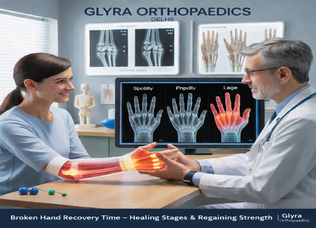
Breaking a hand can feel frustrating and overwhelming. The hand plays a role in almost everything we do—holding a phone, eating, writing, cooking, or working. When a fracture happens, daily life suddenly slows down. A common question at Glyra Orthopaedics is about the healing time for a hand injury.
Understanding Broken Hand Recovery Time helps patients stay calm, patient, and confident during healing.
What Does Broken Hand Recovery Time Really Mean?
Broken Hand Recovery Time is not just about the bone joining back together. IRecovery includes letting the swelling go down, restoring finger movement, and regaining strength. Once the cast or splint is off, the hand might still feel tight or weak. That’s a normal part of healing and improves gradually.
Every person heals differently. Some recover quickly, while others need more time—and both are completely okay.
What Can Affect Broken Hand Recovery Time?
Several everyday factors influence Broken Hand Recovery Time, such as:
- Which bone in the hand is broken.
- How severe the fracture is.
- Swelling around the hand and fingers.
- Whether surgery was needed.
- Age and bone strength.
- How well rest and exercises are followed.
At Glyra Orthopaedics, doctors clearly explain these points so patients know why healing takes time.
Early Stage: Rest and Protection
The early stage of Broken Hand Recovery Time is all about rest, with the hand placed in a cast, splint, or brace to protect the bone as it heals.
During this stage:
- Swelling slowly reduces
- Pain becomes easier to manage
- Movement stays limited
- Gentle finger movement may be allowed
This phase usually lasts a few weeks. Trying to use the hand too early can slow healing.
Middle Stage: Movement Returns
Once X-rays show that the bone is healing, the next phase of Broken Hand Recovery Time begins. This stage focuses on gentle movement.
Patients may notice:
- Stiff fingers.
- Weak grip.
- Difficulty holding objects.
- Tiredness in the hand.
Physiotherapy often starts here to help fingers bend, stretch, and move comfortably again.
Later Stage: Strength and Confidence
The last stage of Broken Hand Recovery Time is about rebuilding strength and confidence, as the hand gradually goes back to normal use.
Patients begin to:
- Grip objects more firmly.
- Use the hand for daily tasks.
- Improve coordination.
- Feel less discomfort.
Heavy tasks or sports might need more time, but daily activities start feeling easier.
How Physiotherapy Helps
A key part of Broken Hand Recovery Time is physiotherapy. It helps the hand stay flexible, improves movement, and restores strength. Not following exercise routines can delay healing and increase stiffness.
Simple Tips to Heal Better
Patients can support Broken Hand Recovery Time by:
- Keeping the hand elevated.
- Avoiding heavy lifting early.
- Doing exercises regularly.
- Eating calcium- and protein-rich foods.
- Attending follow-up visits.
Final Thoughts
Broken Hand Recovery Time requires patience, care, and the right guidance. With guided care from Glyra Orthopaedics, patients recover safely, rebuild hand strength, and get back to daily life with confidence. Healing takes time, but steady progress happens with the right support.
Had a great experience with us? We’d love to hear your thoughts! Click here to leave a Google review and share your feedback.