Hip Replacement Causes and Risk Explained
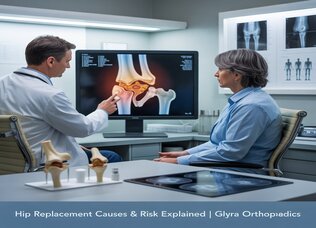
Hip pain can affect your daily routine. Tasks once taken for granted, such as walking short distances, sitting for long periods, or resting at night, may start to feel difficult. At Glyra Orthopaedics, we guide patients to understand hip replacement causes so they can take informed decisions with clarity and confidence. Understanding the cause of joint damage reduces anxiety and improves long-term outcomes.
The Hip Joint and Why It Fails
The hip joint is vital for routine activities such as walking and sitting. A layer of cartilage lines the ball-and-socket shape, helping the joint glide smoothly without friction.
With time, hip cartilage may gradually break down, reducing the smooth cushioning within the joint. This creates bone-on-bone friction, which can cause persistent pain, stiffness, and difficulty moving. Common hip replacement causes are:
- Osteoarthritis
- Hip fractures affecting alignment and stability
- Bone disorders that weaken the hip joint
- Severe deformities that are congenital or progressive
Once cartilage damage becomes severe, the joint loses normal function and conservative treatment often becomes less effective.
Injuries That Lead to Long-Term Damage
In many cases, hip replacement causes develop gradually after injuries that occurred years earlier. A previous fall, sports injury, or road accident can quietly alter the joint surface. Even when pain settles, the hip may start moving differently, creating imbalance, instability, and increased pressure on cartilage.
If fractures don’t heal properly or ligament injuries are missed, repeated small impacts can affect hip function. This hidden wear comes forward later with sudden pain without injury.
Medical Conditions That Increase Risk
Some health conditions raise the risk of hip joint damage and the need for surgery. These include:
- Rheumatoid arthritis and other chronic inflammatory conditions
- Prolonged steroid use affecting bone quality
- Metabolic bone disorders
- Low bone density, including osteoporosis
At Glyra Orthopaedics, specialists assess medical history in detail to see how these issues relate to hip replacement causes. Detecting risks early helps doctors advise preventive steps and regular follow-up.
Lifestyle and Occupational Stress
Daily habits and work environments also play a major role. Jobs involving heavy lifting, repetitive movements, climbing, or long hours of standing place continuous stress on the hip joint. Athletes and manual workers may experience faster joint wear if proper training, recovery, and conditioning are neglected.
On the other hand, a sedentary lifestyle can also be harmful. When hip and core muscles are weak, the joint loses stability, increasing stress and worsening degeneration.
Recognising the Warning Signs
Hip replacement causes are easier to recognise once pain starts disrupting everyday life. Common warning signs include:
- Persistent pain in the groin, thigh, or buttock.
- Trouble climbing stairs or getting up from a chair.
- Limping or change in walking pattern.
- Restricted movement and stiffness.
Ignoring these symptoms can worsen joint damage and make treatment more difficult later.
How Glyra Orthopaedics Manages Risk
Early evaluation at Glyra Orthopaedics includes detailed examination, imaging, and functional review. Surgical decisions are taken after a clear discussion of every option, along with tailored care and ongoing support.
Conclusion
Understanding hip replacement causes helps patients prepare both physically and mentally for treatment. Proper guidance plays a key role in reducing risks and improving recovery outcomes.
Had a great experience with us? We’d love to hear your thoughts! Click here to leave a Google review and share your feedback.