
Essential Hip Replacement Exercises for Faster Healing
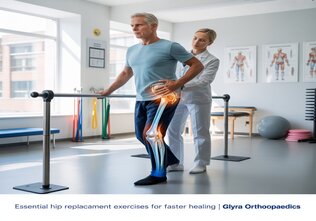
Hip replacement recovery does not stop after surgery. Movement is essential to help the new joint settle and function properly. Hip Replacement Exercises support muscle recovery, reduce stiffness, and improve overall mobility. These exercises also help patients feel more confident in their movements as healing progresses. At Glyra Orthopaedics, personalised Hip Replacement Exercises are introduced step by step, so that the patients not only recover safely but also build long-term joint strength.
Why Exercises Matter After Hip Replacement
Hip replacement surgery helps to reduce joint pain, but recovery is largely dependent on how well the surrounding muscles are able to heal. Without regular exercise, stiffness and weakness can make walking and daily movements difficult. Hip replacement exercises increase blood circulation, loosen tight muscles, and help the body relearn natural movement patterns. This structured approach reduces complications and supports a quicker, more confident return to everyday independence.
Early-Stage Exercises: First Few Days
The journey of recovery starts with gentle movements which begin soon after surgery. These exercises focus on improving circulation and preventing stiffness and at the same time also help in protecting the new joint.
Common early exercises include:
● Ankle pumps to promote blood flow.
● Gentle leg slides while lying down.
● Quadriceps tightening exercises.
● Short assisted walks.
Physiotherapists keep a close check on the exercises to make sure that the patients are having a correct posture and safe movement.
Strength-Building Exercises: Weeks 2 to 6
As pain reduces and confidence improves, patients progress to strength-focused exercises. This phase builds muscle support around the hip joint, which improves stability and walking ability.
Hip replacement exercises during this phase may include:
● Standing hip abduction exercises
● Controlled leg lifts
● Seated knee extensions
● Balance training with support
Patients should perform these exercises regularly under professional guidance to avoid strain and promote steady improvement.
Advanced Exercises for Better Mobility
bring back flexibility, coordination, and endurance. Patients may start stair practice, longer walks, and light resistance exercises.
Regular practice of these movements helps patients:
● Walk longer distances comfortably.
● Improve posture and balance.
● Reduce muscle fatigue.
● Build confidence in daily movement.
Consistency plays a key role in achieving faster healing.
Safety Tips for Exercising After Surgery
To heal properly, patients need to follow medical guidance while performing hip replacement exercises. Sudden twisting, bending too far, or skipping warm-ups can slow down the recovery. One can prevent setbacks when they listen to their body and stop exercises that lead to sharp pain.
Conclusion
Patients should always follow their doctor’s or physiotherapist’s advice while doing hip replacement exercises. The exercises done after surgery are designed in such a way that they heal the joint safely. If there is any sudden twisting, bending too far, or rushing through movements can slow recovery. Warming up before exercising prepares the muscles and reduces the risk of strain. Recovery improves when patients listen to their body. Stopping an exercise that causes sharp pain and informing the therapist helps protect healing progress.
Had a great experience with us? We’d love to hear your thoughts! Click here to leave a Google review and share your feedback.