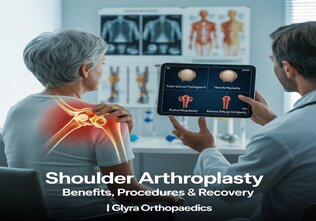
Shoulder Arthroplasty: Benefits, Procedures, and Recovery
If you are struggling with long-term, exhausting shoulder pain and limited movement, you may have heard your orthopaedic surgeon mention the term shoulder arthroplasty. For many people suffering from severe arthritis, rotator cuff tear arthropathy, or complex fractures, this surgical procedure, more commonly known as a shoulder replacement, offers a life-changing solution to bring back function and finish off the pain.
This guide clarifies what shoulder arthroplasty involves, outlines the important benefits, explains the different types of procedures, and sets clear expectations for your recovery journey.
The Core Benefits of Shoulder Arthroplasty
Deciding on major surgery is always a big step, but many patients experience significant improvements through shoulder arthroplasty when chronic shoulder issues disrupt daily life. The goals of the surgery are clear and can make an enormous difference.
- Relieve Chronic Pain: We help to put an end to the severe, constant pain that restricts daily activities and disturbs sleep.
- Restore Mobility: Replacing the affected joint parts helps reduce stiffness and brings back a smoother motion.
- Improve Quality of Life: After a successful shoulder arthroplasty, patients commonly return to regular routines with less pain and greater confidence.
When non-surgical treatments like medication, injections, and physiotherapy no longer provide relief, a replacement is often the next logical step.
Understanding the Different Procedures
Orthopaedic surgeons typically select from three main types of shoulder arthroplasty, and change the procedure as per your specific injury and anatomy:
Procedure | What It Does | Best Suited For |
Total Shoulder Replacement (TSA) | Replaces both the ‘ball’ (humeral head) and the ‘socket’ (glenoid). | Severe osteoarthritis, rheumatoid arthritis. |
Hemiarthroplasty | Replaces only the ‘ball’ (humeral head); the socket is left intact. | Complex fractures, when the socket cartilage is healthy. |
Reverse Total Shoulder Arthroplasty (RSA) | Switches the ball and socket positions. The ball goes on the shoulder blade, and the socket goes on the arm bone. | Irreparable rotator cuff damage (Rotator Cuff Tear Arthropathy). |
Your surgeon will discuss which type of shoulder arthroplasty is most appropriate to ensure the best functional outcome for you.
Preparing for and Recovering from Shoulder Arthroplasty
Preparation is key to a smooth recovery. Before your shoulder arthroplasty, we often ask you to complete pre-operative strengthening exercises (prehab) to improve your strength and flexibility.
The surgery itself typically takes 1–3 hours. Most patients spend a couple of nights in the hospital and go home with their arm in a sling.
Your rehabilitation programme is the most critical part of the process:
- Immobilisation (First 4–6 Weeks): The focus is on protection while the soft tissues heal. You perform passive and gentle assisted range-of-motion exercises.
- Active Movement (Weeks 6–12): You begin to move your arm slowly and steadily, working to get back the full range of motion.
- Strengthening (From 12 Weeks Onwards): You introduce resistance to rebuild the strength important for daily life and hobbies.
Full recovery from shoulder arthroplasty can take 6 to 12 months, but most patients notice a reduction in pain within the first few weeks. Commitment to your physiotherapy is what truly matters in the long-term success of your shoulder arthroplasty.
Had a great experience with us? We’d love to hear your thoughts! Click here to leave a Google review and share your feedback.